Overview
Grok Bot — xAI's platform of AI agents — is genuinely useful for marketing, but not in the way a lot of guides describe. It isn't a marketing suite with a "Social Media" tab and an "Email Campaigns" tab; it's a team of AI agents you brief and set loose on real work across your apps. Used well, it can research, draft, and prepare at a speed no human team matches. Used badly — on autopilot, unchecked — it'll confidently publish off-brand or wrong things in your name. This practical guide shows the useful, honest way to put it to work.

Difficulty: Easy — no code · You'll need: an X / SpaceXAI account with Grok Bot access · Cost: free tier plus paid plans · Updated: September 2026
First: How Grok Bot Actually Works
Grok Bot is the agent layer from xAI (Grok is the underlying chatbot). The mental model is simple:
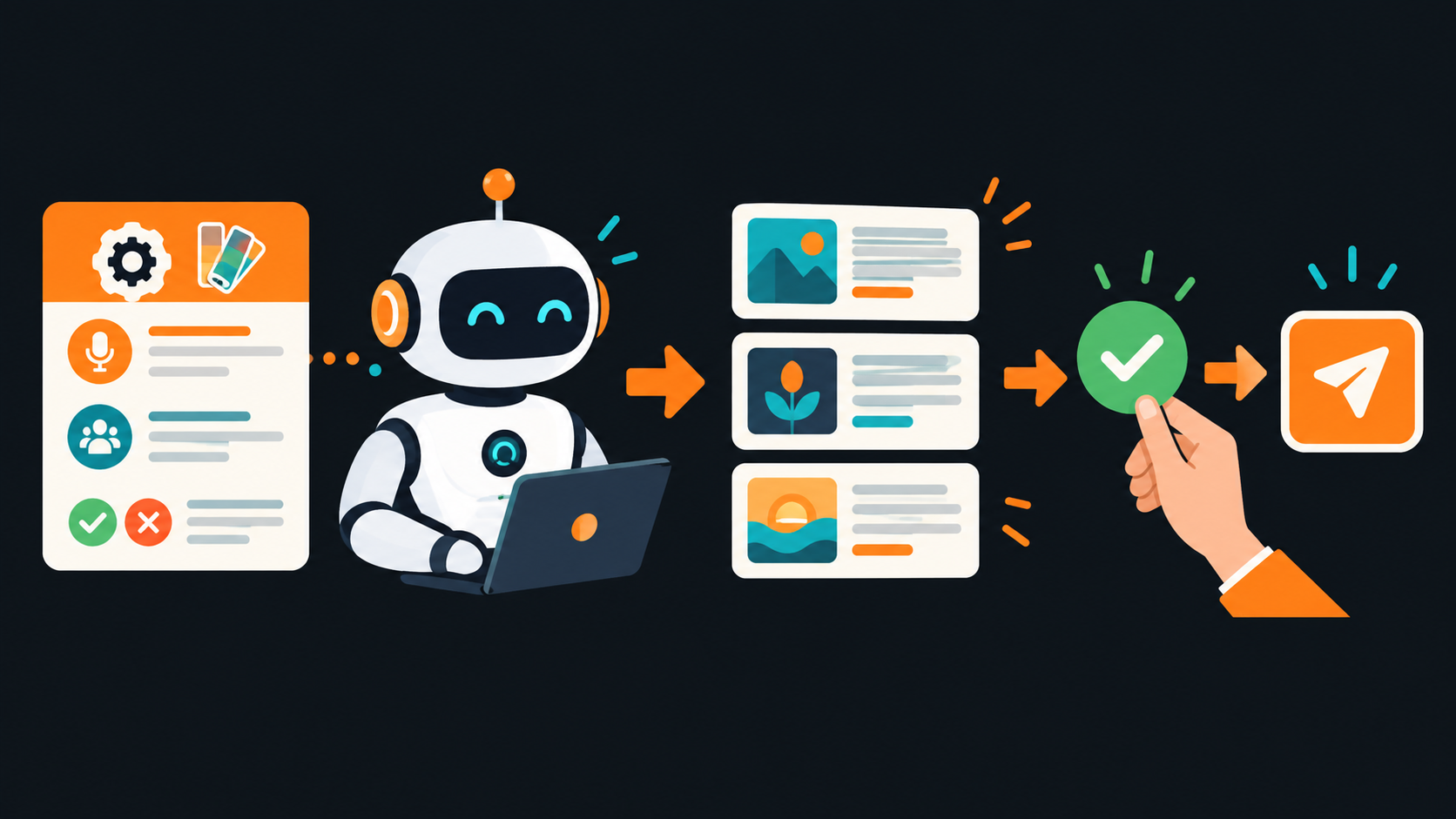
1. Create a bot — give it a name, teach it your brand's voice and rules, and give it a goal.
2. Let it run a workflow — it can act across your apps, tools, and websites (with connectors to things like your CRM), and several bots can run in parallel.
3. You review and approve — nothing hits a public channel, an email list, or an ad budget without your sign-off.
That third step is the whole difference between "a fast marketing assistant" and "a liability." Keep it.
The Golden Rule for Marketing
Build Your Foundation: A Brand-Voice Bot
Before the use cases, do this once. Create a bot and give it a reusable brand brief so everything it produces sounds like you:
You're my marketing assistant for [brand] — we sell [what] to [audience].
Voice: [e.g. warm, expert, no hype]. Always: [rules]. Never: [banned
claims/words]. When you state a fact, statistic, or price, mark it
[VERIFY] instead of inventing it. Ask before doing anything that would
publish, send, or spend.
That single brief makes every later task on-brand and safer — reuse it for all five workflows below.
5 Practical Marketing Workflows
1. Competitor & market research
Point an agent at the open web to compile what would take you an afternoon: "Research the top 5 competitors for [product]. Summarize their positioning, pricing, and recent campaigns, with source links." You get a sourced brief in minutes — then you sanity-check the sources.2. On-brand content drafting at volume
With your brand-voice bot: "Draft 7 LinkedIn posts for next week promoting [launch], mixing tips, a question, and one behind-the-scenes. Use our voice; mark any stat [VERIFY]." Review, edit, and you schedule them (Grok Bot drafts; a real scheduler publishes).3. Repurpose one asset into many
Feed it a blog post or webinar and ask it to spin out a newsletter, five social posts, and a short-video script — all in your voice. This is where an agent genuinely multiplies a small team.4. Campaign prep & briefs
Turn a rough idea into a structured plan: "Build a 2-week content calendar for [campaign] with channels, angles, and a one-line brief per post." You approve and assign.5. Reporting in plain English
If you connect an analytics source, have an agent summarize it: "Summarize last month's campaign results and flag what changed." Critical caveat: AI is unreliable at exact arithmetic — let it narrate trends from real numbers your tools computed, and verify any figure before you repeat it.The Guardrails That Keep You Safe

[VERIFY] rule in your brief is your safety net — never let an agent invent numbers or claims.Common Mistakes to Avoid
Pro Tips
[VERIFY] convention turns hallucinations into a quick checklist.Key Takeaways
xAI's AI-agent platform — create bots that run real workflows across your apps. Requires an X / SpaceXAI account; free tier plus paid plans.
xAI's chatbot that powers Grok Bot's agents. Useful for drafting and research — verify its outputs, and keep a brand-safety review before publishing.
Sources: Grok Bot (x.ai) · Grok
Grok Bot's features, plans, and connectors evolve quickly; verify against xAI's official pages. Always review AI output for accuracy and brand safety, and keep a human in control of anything that sends, spends, or publishes.