Overview
On September 22, 2026, Anthropic released Claude Opus 5.5 — its newest flagship model. The headline isn't a giant leap in raw intelligence; it's that Opus 5.5 delivers roughly the quality of Anthropic's top-tier Fable 5.1 on most work while being noticeably cheaper and faster to run. For anyone who uses Claude — whether in the app or to power an app — that combination matters more than another benchmark record. This guide explains what actually changed, the numbers, and the honest catch that most launch coverage skims over.

Difficulty: Easy — news explainer, no setup · Reading time: ~10 min · Updated: September 2026
What Is Claude Opus 5.5?
Opus is Anthropic's most capable model line (above Sonnet and Haiku). Opus 5.5 is the first model in the new "5.5" generation — a refinement of Opus 5 aimed squarely at long-running coding agents, research, and professional knowledge work. Anthropic positions it as performing at the level of its highest-end model (Fable 5.1) on most tasks, for a fraction of the cost.
Practical details:
claude-opus-5-5What's Actually New: Cheaper, Faster, a Bit Smarter
The real story of Opus 5.5 is efficiency. The same class of intelligence now costs less and runs quicker.

Cheaper. API pricing dropped to $4 per million input tokens and $20 per million output tokens — a 20% cut from Opus 5's $5/$25. Cache reads fell even harder, from $0.50 to $0.20 per million (a 60% cut). Anthropic also claims the model needs fewer tokens and compute per task, so it estimates roughly 40% lower cost for a typical workload versus Opus 5, with output around 30% faster. (Treat the "40%" and "30%" as Anthropic's figures.)
Stronger where it counts. The gains are concentrated in agentic coding and long-horizon tasks — the stuff where a model has to plan, use tools, and keep going for a long time. One early tester reportedly had it complete a ~680,000-line code migration in under a day; that's a company-shared anecdote, not a controlled result, but it points at where 5.5 is meant to shine.
Clearer, too. Anthropic notes the model writes with less jargon and leads with the important information — a small but genuinely useful change for everyday work.
The Benchmarks (and Anthropic's Own Caveat)
On Anthropic's reported numbers, Opus 5.5 leads recent models:
But here's the refreshing part — Anthropic itself downplays the scoreboard. In its own words, "benchmark margins have become a less reliable guide to real-world differences" at this level of capability. In plain terms: the models are now close enough that a few percentage points on a benchmark won't necessarily be felt in your actual work. Judge it on your tasks, not the leaderboard.
The Honest Catch: Silent Routing
This is the part the excitement tends to skip. To keep a frontier model safe, Anthropic quietly re-routes certain sensitive requests to an older model — and you can't see when it happens.
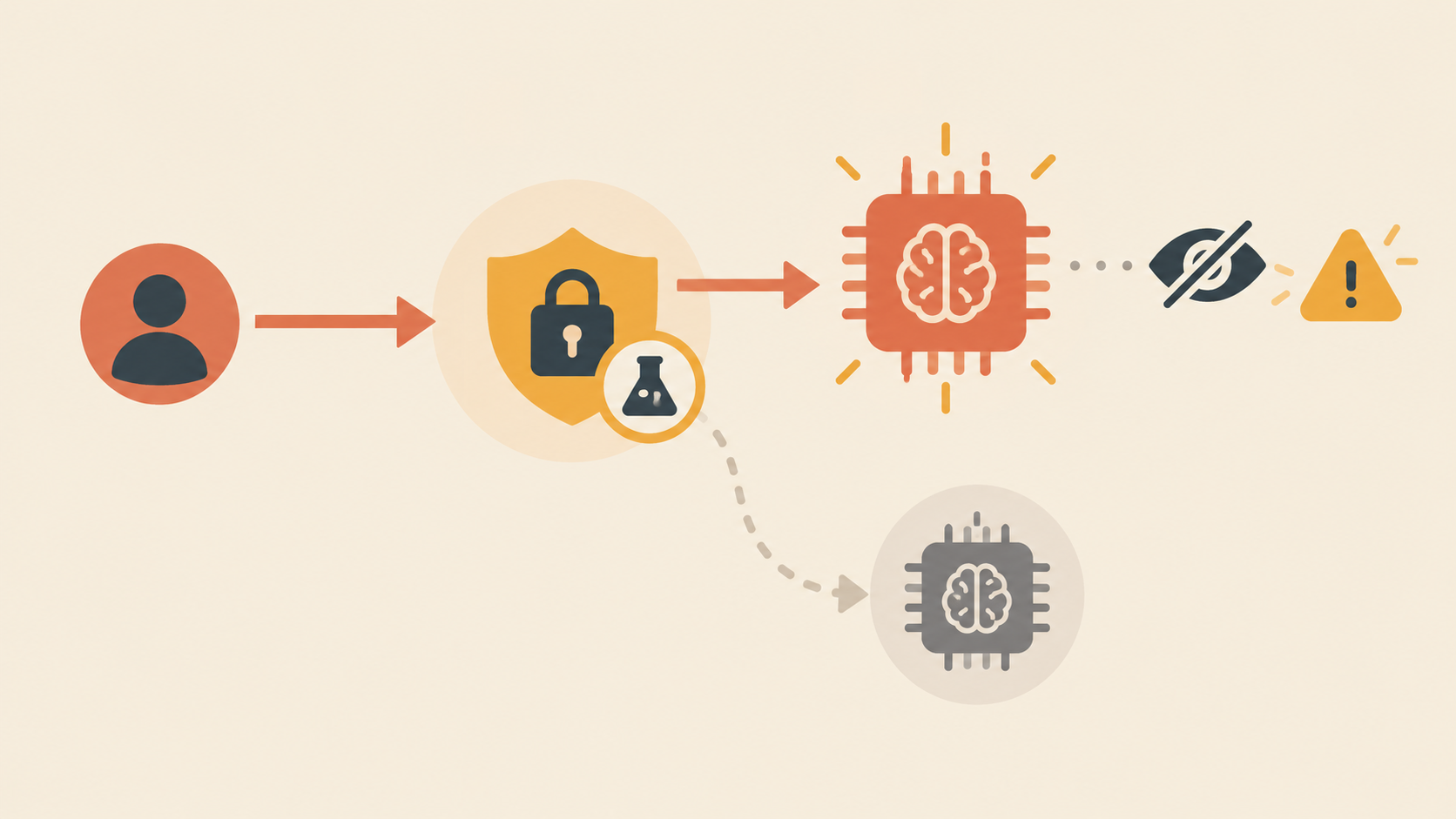
Specifically, many cybersecurity tasks are reportedly handled by the older Opus 4.8 instead of 5.5 (routine debugging stays on 5.5), and biology-related prompts carry heavy safeguards. When this fallback triggers, the request is answered by a different model with no visible indication to the user, and no documented opt-out.
Why it matters: for most people this is invisible and harmless — a reasonable safety measure that limits help with exploits or bioweapons. But it's a real transparency gap. If you do security research or anything the safeguards flag, you may quietly be getting a weaker, older model's answer without knowing it — which makes results harder to reason about.
What It Means for You
If you use Claude.ai (Pro/Max): you likely now have the smartest, clearest Claude available — reach for Opus 5.5 on your hardest tasks (complex analysis, coding, long documents), and enjoy that it's faster than before. For quick everyday chats, a lighter model is still fine (and Sonnet/Haiku 5.5 are coming).
If you build with Claude Code or the API: the cheaper-and-faster combo is a genuine win for agentic and coding workloads — the same job costs less and finishes sooner. Update to claude-opus-5-5, mind the breaking changes, and keep the silent-routing caveat in mind if your product touches security.
The bigger picture: this is the pattern to expect now — capability holds or rises while prices keep falling. A ".5" release like this is a meaningful efficiency jump, not a revolution — and Anthropic, to its credit, says as much. Pick your model by testing it on your real work, not by the benchmark headline.
Key Takeaways
claude-opus-5-5; 1M context; June 2026 knowledge.The source announcement with Anthropic's own benchmarks, pricing, and positioning for its newest flagship model.
Use Opus 5.5 in the Claude app (Pro/Max). Pick it for your hardest tasks; lighter models handle quick everyday chats.
Outside reporting on the Opus 5.5 launch: lower prices, Fable-level performance, and what changed.
Sources: Anthropic announcement · TechCrunch · VentureBeat
Model specs, pricing, and routing behavior come from Anthropic and its launch coverage and were accurate as reported in September 2026; verify current details on Anthropic's official pages before relying on them.