Overview
If you use Windows, Word, Excel, or Outlook, you already have an AI assistant sitting right next to you — you might just not have said hello yet. It's called Microsoft Copilot, and it's Microsoft's answer to ChatGPT, woven directly into the everyday tools you already know. Ask it a question, have it draft an email, summarize a long document, tidy up a spreadsheet, or turn rough notes into a slide deck — in plain English, no technical skills required.
This is a gentle, beginner-friendly walkthrough. We'll cover what Copilot actually is, the difference between the free and paid versions (so you don't pay for something you don't need), where to find it, and — most importantly — easy first tasks you can try in the next five minutes to see the magic for yourself.
Don't worry if you've never used an AI tool before. Copilot is designed to feel like chatting with a helpful colleague — you type what you want in normal words, and it does the heavy lifting. Let's get you comfortable.
Difficulty: Easy — total beginners welcome · You'll need: a free Microsoft account (a work or school account unlocks more) · Cost: the core Copilot is free; paid tiers add extras · Updated: August 2026
What Is Microsoft Copilot?
Think of Copilot as a smart assistant that lives inside Microsoft's software. Under the hood it runs on the same class of powerful AI models that power ChatGPT, but Microsoft's twist is putting it where you already work — in your browser, in Windows, and (with a paid plan) right inside Word, Excel, PowerPoint, Outlook, and Teams.
There are really two ways it helps:
You don't need to learn commands or code. You just describe what you want, the way you'd ask a coworker.
Where You'll Find Copilot
Copilot shows up in a few places, and knowing them makes it feel far less mysterious:
copilot.microsoft.com, plus a phone app) — a chat assistant anyone can use, free, with web search built in.
Free vs Paid: Which Copilot Is Which
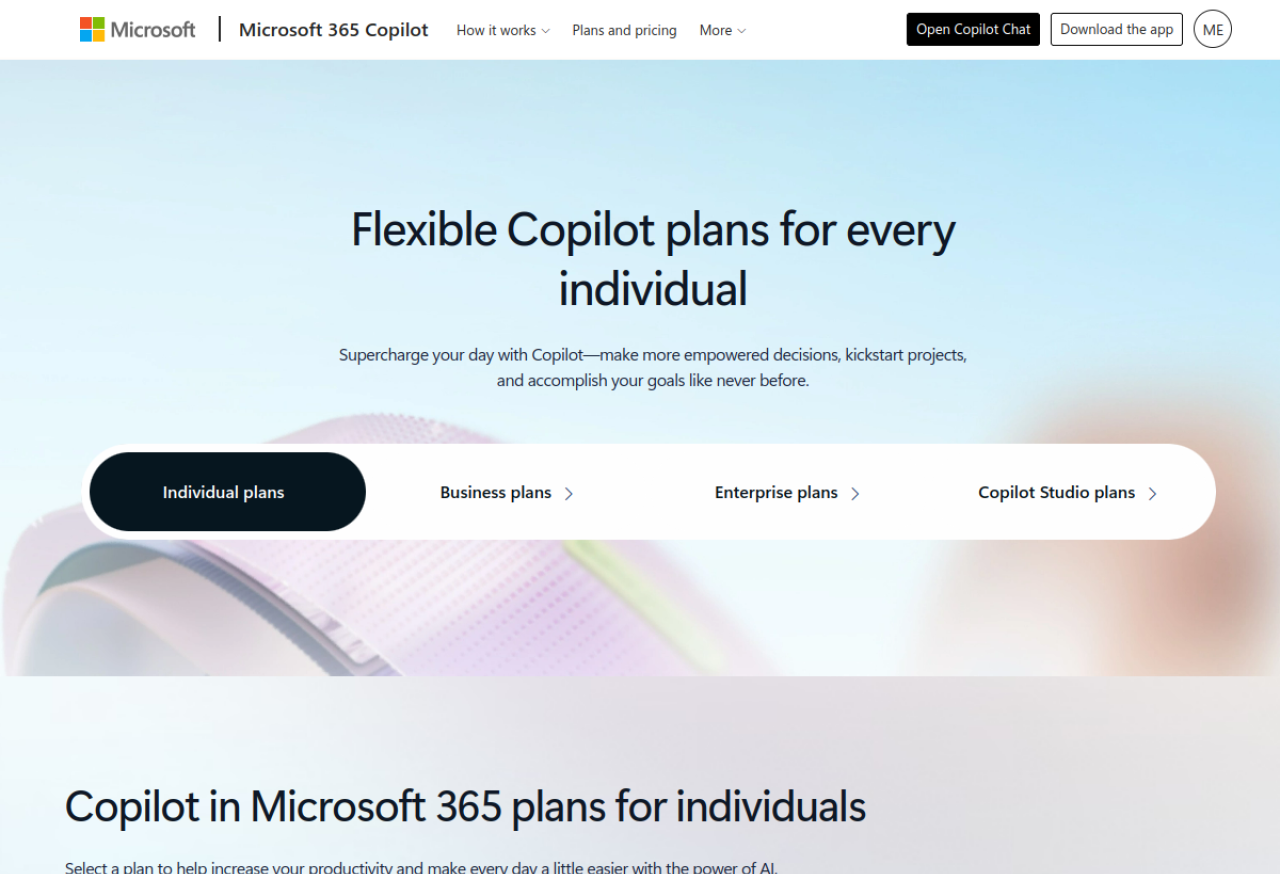
This is the part that confuses everyone, so here's the simple version. There are three tiers:
copilot.microsoft.com. Ask questions, get answers, brainstorm, write drafts, search the web. Great for most personal use. It does not work inside your Office apps, and image generation is limited.The easy rule: start with the free version to get comfortable. Only upgrade to Pro if you specifically want Copilot writing and analyzing inside Word and Excel, or to a business plan if your whole team needs it on work data.
Your First 5 Minutes with Copilot
Enough theory — let's actually use it. This works on the free version.
Step 1: Open Copilot
Go to copilot.microsoft.com (or open the Copilot app), and sign in with your Microsoft account. You'll see a simple chat box — that's the whole interface.
Step 2: Ask it anything
Type a real question the way you'd say it out loud, and press enter. Try one of these:
You'll get a clear, written answer — and you can just keep chatting to dig deeper ("make that vegetarian," "shorter, please").
Step 3: Try a real task
Now hand it something useful:
That's it — you're using AI. No setup, no jargon.
The free chat assistant — ask questions, draft text, brainstorm, and search the web. The best place for a total beginner to start.
Easy Wins: 6 Things to Try Today
Once you're comfortable, these are the everyday tasks people love Copilot for:
The trick with all of these: if the first answer isn't quite right, just say so. "Make it warmer," "shorter," "more formal" — Copilot happily tries again.
Copilot Inside Your Office Apps (Pro / Microsoft 365)
If you upgrade, Copilot becomes genuinely powerful because it can work on your real files. A taste of what that looks like:
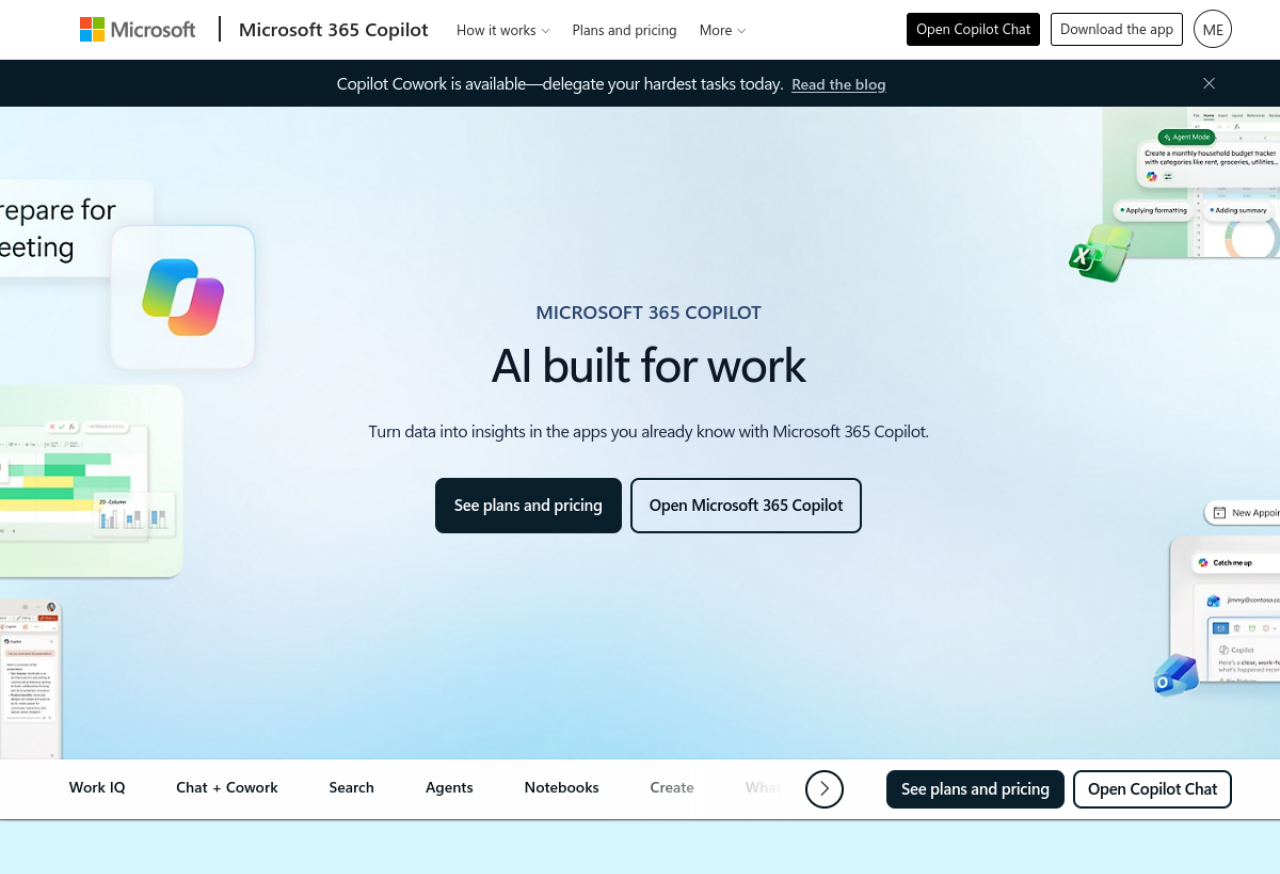
The paid, in-app version: Copilot inside Word, Excel, PowerPoint, Outlook, and Teams, plus a secure work chat across your files. See plans and pricing.
A Few Honest Tips
Common Beginner Questions
Do I need to install anything? No. The easiest way in is your web browser — go to copilot.microsoft.com and sign in. There's also a free Copilot phone app if you'd rather have it on your phone.
Is Copilot the same as ChatGPT? They're cousins. Both are AI chat assistants built on similar underlying technology. Copilot's edge is that it's woven into Microsoft's tools (Windows, Edge, and — on paid plans — Word, Excel, and Outlook) and includes live web search for free.
Will it do my whole job for me? No — and that's the right way to think about it. Copilot is an assistant: it drafts, suggests, and speeds things up, but you're the one who reviews, decides, and hits send. Treat its output as a strong first draft, not a final answer.
Is it safe to use for work? If you sign in with a work or school account on a Microsoft 365 plan, Microsoft applies extra data protections to what you type. On the free consumer version, play it safe and avoid pasting confidential company or personal information.
Which version should a beginner get? The free one. Get comfortable chatting with Copilot first. You'll know it's time to consider Copilot Pro when you find yourself wishing it could help inside your actual Word documents and Excel sheets.
What if I don't like the answer? Just tell it. "Make it shorter," "sound more casual," "try again with a different angle." Copilot is built for back-and-forth — the second or third try is often the keeper.
Key Takeaways
copilot.microsoft.com — chat, draft, summarize, and search, no cost and no setup.Microsoft's own side-by-side of what the free version does versus the paid in-app version — handy when deciding whether to upgrade.
Sources: Microsoft Copilot · Microsoft 365 Copilot · Free vs Microsoft 365 Copilot (Microsoft Support)