
AI skills are the most in-demand thing on the freelance market right now — businesses want chatbots, AI-edited video, generated images, automated workflows, and AI-assisted copy, and most of them have no idea how to do it themselves. That's your opening. This guide is the complete starter playbook for landing AI freelance work, plus a directory of ten platforms to find it — from the big international marketplaces (Upwork, Fiverr) to Hong Kong and Taiwan platforms where you can work in Chinese with local clients.
Difficulty: Beginner-friendly · Required tools: one AI skill you can sell, a small portfolio (even self-made samples), and a profile on one or two of the platforms below · Updated: July 2026
Overview
Freelancing — 接案 — is the fastest way to turn an AI skill into income, because you're paid for outcomes, not employment, and you can start tonight. The market has never been better: demand for AI work is surging while most businesses can't hire for it, so a freelancer who can reliably deliver one AI service is genuinely scarce. The honest part: AI lowers the skill barrier, but clients still pay for judgment, communication, and someone who actually finishes the job. AI makes you faster; it doesn't make you a professional — that's still on you.

There are two worlds of platforms, and you'll likely use both. The international marketplaces (Upwork, Fiverr, Toptal, and others) have the most AI work and pay in USD, but competition is global. The Hong Kong and Taiwan platforms (Toby, Freehunter, Tasker 出任務, PRO360) let you work in Chinese with local clients, which means less competition and easier trust-building — often the best place to land your first paid jobs and reviews before you go global.
The single decision that determines whether this works: niche down. "I do AI" is invisible; "I build ChatGPT customer-service bots for clinics" or "I make AI product photos for Shopify stores" gets hired. A specific service aimed at a specific customer beats being a generalist every time — it's easier to market, easier to trust, and it commands higher rates.
The honest goal: by the end you'll know how to package an AI service, build proof, write proposals that win, and where to find the work — with ten vetted platforms across the international, Hong Kong, and Taiwan markets, and a clear strategy for which to use when.
Who This Is Useful For
What You Will Learn
What You Need
The 接案 Playbook: How to Land Your First AI Client
Step 1: Pick one specific AI service to sell
Don't offer "AI services." Offer one concrete outcome for one type of customer: "AI-generated product photos for e-commerce," "ChatGPT chatbots for local businesses," "AI-edited shorts for coaches." A narrow service is easier to market, easier to trust, and easier to price — and you can always expand later.
Pro tip: Choose the niche where your existing background gives you an edge. If you know restaurants, "AI content for restaurants" beats a generic offer instantly — you already speak the customer's language.

Step 2: Build proof before you have clients
Nobody hires an empty profile. Do three spec projects for imaginary or real brands and show the results — before/after, the process, the outcome. For AI work especially, showing your prompts and your judgment is what proves you're not just clicking a button.
Pro tip: Make one sample for a specific recognizable type of client (a real local café, a well-known product category). "Here's what I'd make for a business like yours" is far more persuasive than abstract art.
Step 3: Set up a profile that gets found and trusted
Your title is a search result — put the exact service and niche in it ("AI Chatbot Builder for Clinics," not "AI Enthusiast"). Lead with the outcome you deliver, use the keywords clients actually search, and keep it about them, not your life story.
Pro tip: Start with one or two platforms, not ten. A strong, complete profile with reviews on one platform beats five half-finished ones — and reviews don't transfer between sites.
Step 4: Choose the right platforms for your goal
This is where the directory below comes in. Rule of thumb: use international platforms (Upwork, Fiverr) for AI-specific, USD-paying volume, and Hong Kong / Taiwan platforms for Chinese-language clients and your first easy reviews. Most freelancers run two or three platforms at once.
Pro tip: Land your first few jobs on a local platform where trust is easier and competition is lighter, bank the reviews, then take that credibility to the bigger international marketplaces where the rates are higher.
Step 5: Write proposals (and gigs) that win
On bidding platforms, a winning proposal is short, personalized, and proves you read the brief: restate their problem, show one relevant sample, propose the outcome, done. On fixed-price gig platforms, your packaging is the pitch — a clear title, tiers, and a strong sample image do the selling.
Pro tip: Open with their problem, not your credentials. "You need a booking bot that stops no-shows — here's one I built" beats three paragraphs about you. Clients skim; lead with the outcome.
Step 6: Price to start, deliver hard, then raise
Start with rates that win your first five reviews — slightly low is fine when you have no track record. Then over-deliver, over-communicate, hit deadlines, and ask for the review. Every few good reviews, raise your rate. Reviews are the flywheel that turns a beginner into a booked freelancer.
Pro tip: Treat the first client's review as the real payment. A five-star review with a specific outcome ("built our chatbot in 3 days, cut inquiries 40%") earns you the next ten clients — worth more than the fee itself.
10 Platforms to Find AI Freelance Work

International (pay in USD, most AI work)
1. Upwork — The biggest marketplace by volume, with the widest range of AI projects. You bid on posted jobs and build long-term client relationships. Best for AI development, automation, writing, and consulting. Takes a freelancer fee; competition is global, so niche down.
2. Fiverr — You package services as fixed-price "gigs" and clients come to you. Great for productized AI services (a set chatbot package, a batch of AI images). Fiverr Pro is the vetted tier for higher rates.
3. Toptal — Curated, top-tier, high-paying — but you must pass a rigorous screening. Worth it for senior AI engineers and specialists who want quality clients over volume.
4. Contra — Charges freelancers 0% commission, so you keep 100% of what you earn. All skill types, modern profiles; good for building a client base without platform fees eating your rate.
5. Braintrust — A community-owned tech-talent network that also charges talent 0% (clients pay the fee instead). Best for senior technical and AI roles.
6. Freelancer.com — One of the largest by sheer volume, with a bid-and-contest model. Huge project count across every category; useful for casting a wide net while you're starting out.
Hong Kong
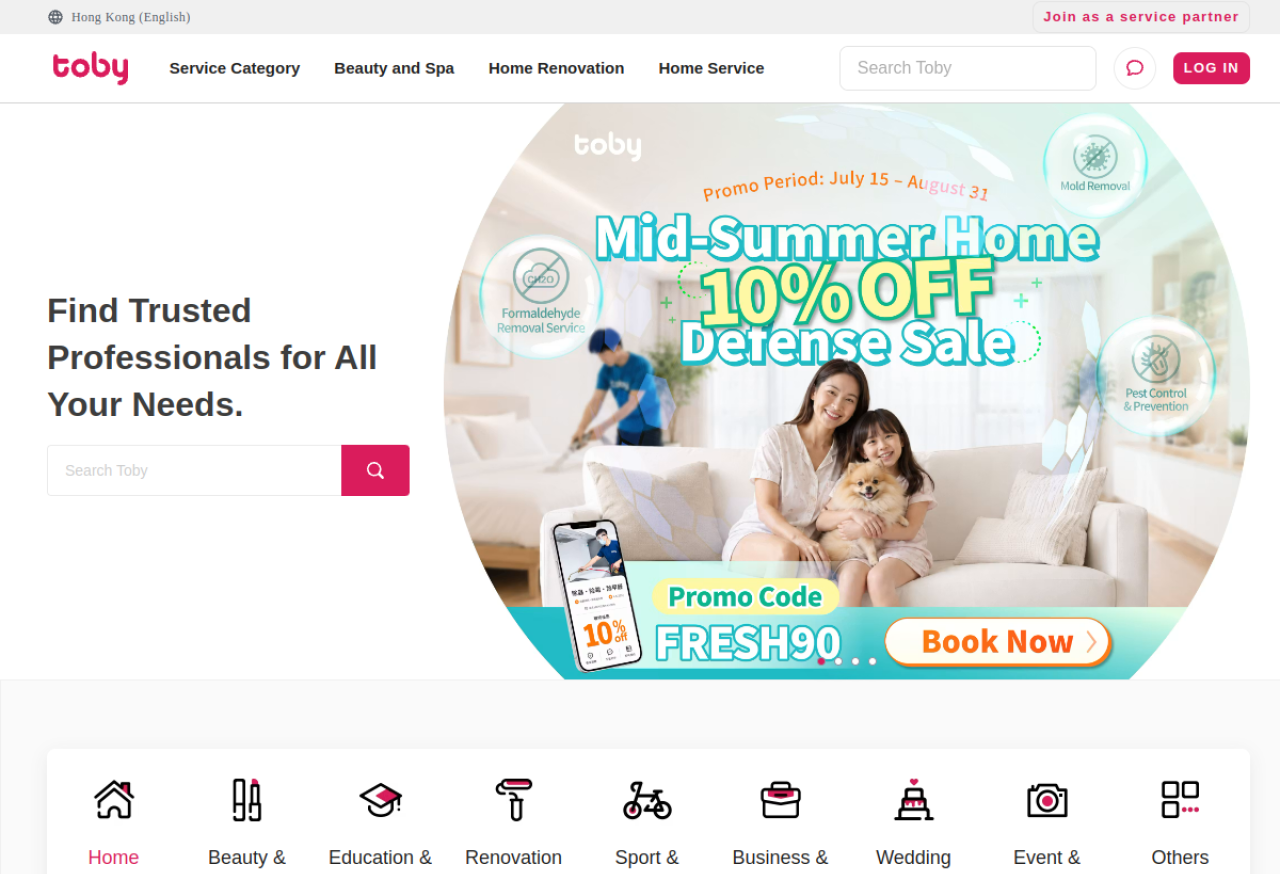
7. Toby (HelloToby) — Hong Kong's largest local service platform, connecting freelancers with local clients across web design, marketing, photography, tutoring, and more. Clients post needs and you quote — ideal for reaching the HK local market in Chinese.
8. Freehunter — A Hong Kong-based platform focused on creative and digital freelancers (design, photography, video, writing, marketing), with 40,000+ freelancers and clients like WeWork and UBS. It has also expanded into Taiwan and Singapore.

Taiwan
9. Tasker 出任務 (formerly 518外包網) — Taiwan's major outsourcing-matching platform covering design, web, translation, development, marketing, and accounting, with real-name verification and a built-in contract/escrow system. Since its late-2023 revamp it takes no commission (you verify your identity to accept jobs).

10. PRO360 達人網 — A Taiwan platform with 400+ service categories using a transparent points-based quoting system where you pay credits to send quotes (credits don't expire). Broad demand from local clients.
3 Common Mistakes to Avoid
Going Further
Key Takeaways
Sources: 15 Best Freelance Platforms in 2026 — VentureLab · Top 10 Freelance Websites in Hong Kong — Flexable · Freehunter — Hong Kong Freelance Platform · Toby (HelloToby) · 13個接案平台推薦 (2026) — Dean Life · 出任務 Tasker