Video GenerationAdvanced18 min read

Midjourney 101 — Visual Continuity: Mastering SREF, CREF, and Omni References

The "Secret Sauce" for branding and storytelling. Master the reference system to maintain character and style consistency across different prompts so your visuals always belong to the same campaign.

Midjourney 101 — Visual Continuity: Mastering SREF, CREF, and Omni References

The One-Off Trap

The biggest frustration for new AI creators is the lack of "memory." You generate a perfect character in a cafe, but when you ask for the same character in a boardroom, they look like a completely different person. In the professional world, this is a deal-breaker. A brand needs a consistent soul.

In May 2026, Midjourney has solved this with a trio of continuity tools. We are moving beyond the prompt and into Reference Architecture. This module teaches you how to "pin" your visual DNA so that every image you generate feels like it was shot on the same day by the same photographer.
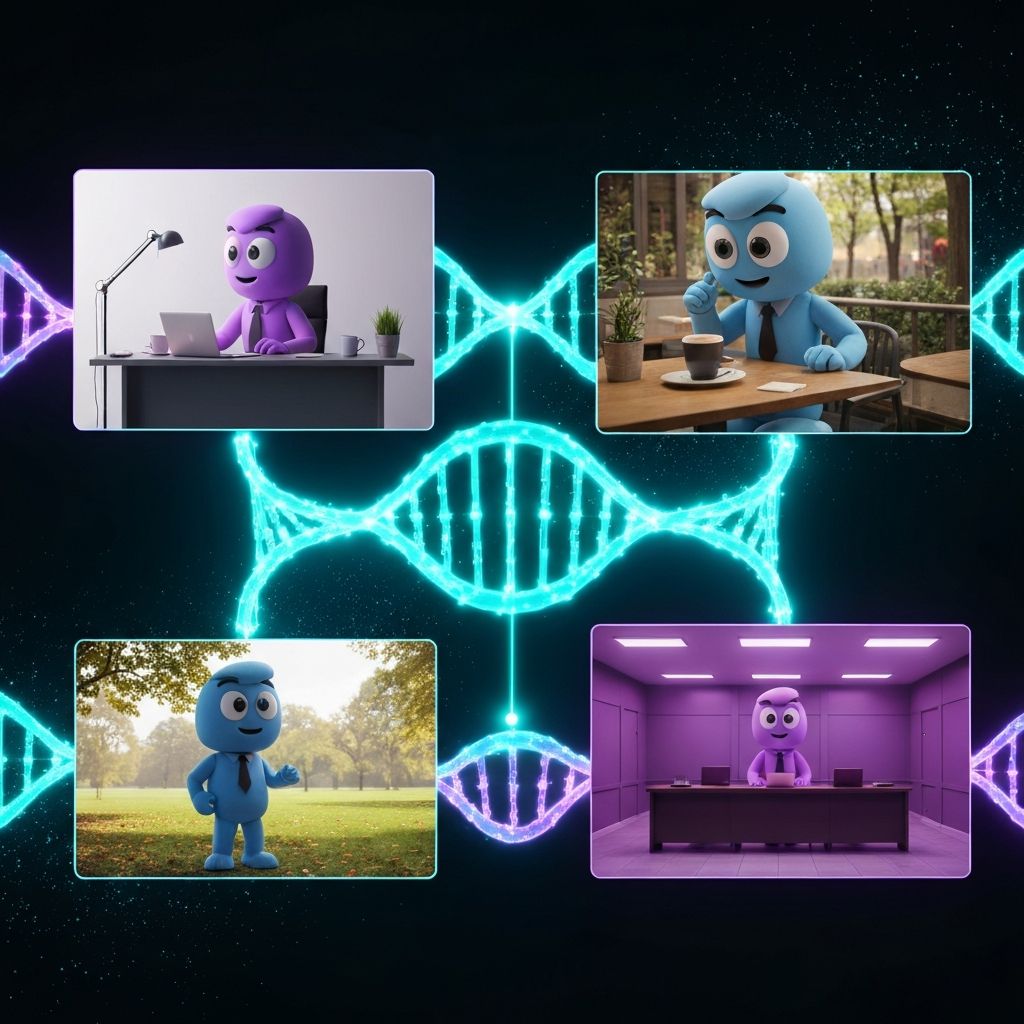
A digital DNA strand glowing in cyan and purple, connecting four different scene images showing a consistent mascot across desk, cafe, park, and boardroom settings

What You Will Learn

  • Section 1: SREF—The Aesthetic Glue (Style Reference)
  • Section 2: CREF—Character Integrity (Character Reference)
  • Section 3: --oref—The 2026 Omni Link (Combined Reference Authority)
  • Section 4: Strength Controls—The --sw and --cw Dials
  • Section 5: Building Brand Universes—Real-world campaign workflow
  • Section 1: SREF – The Aesthetic Glue (Style Reference)

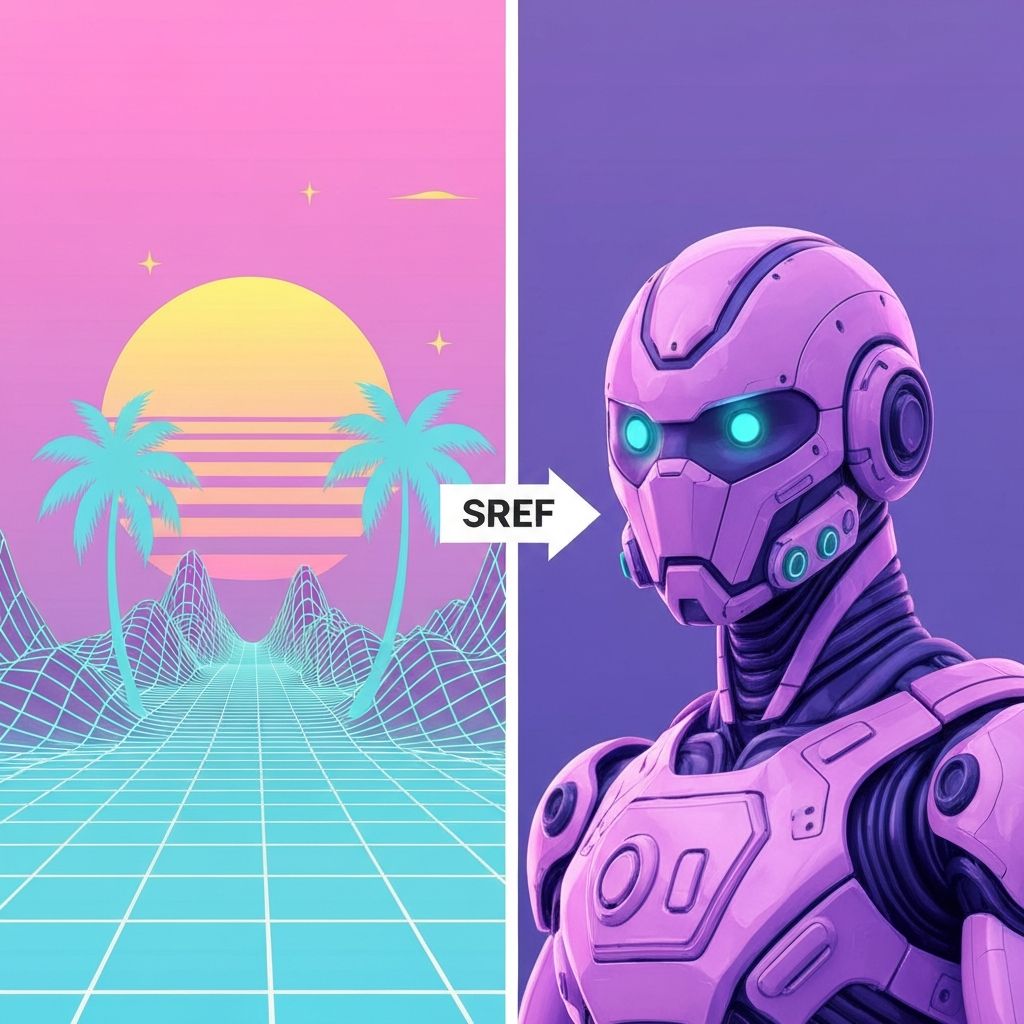
    The Concept: Style Reference (--sref) is how you copy-paste a vibe without copying the subject. If you have an image with a beautiful "80s Retro-Vaporwave" aesthetic, you can apply that exact vibe to any new subject—a robot, a landscape, a product—while maintaining the original style language.

    How SREF Works

    Step 1: Identify Your Aesthetic

  • Find or create an image with your desired style
  • Could be: color palette, lighting mood, texture, composition approach
  • This becomes your aesthetic authority
  • Step 2: Get the Image ID

  • In Web Alpha: Right-click image → "Get Image ID"
  • In Discord: Extract from the image URL after /file/
  • Copy the full ID (32-character alphanumeric code)
  • Step 3: Apply to New Prompt
    \\\
    /imagine prompt: A sleek robot in a corporate boardroom, professional lighting --sref [IMAGE_ID]
    \
    \\

    Expected Result: The robot inherits the vaporwave color palette, lighting treatment, and overall aesthetic from your reference image—but remains a completely different subject.

    SREF Use Cases

    Brand Color Consistency

  • Generate all marketing assets with the same color palette
  • Ensures visual unity across social media, website, print
  • Lighting Language

  • Apply the same cinematography style to different subjects
  • Golden hour + volumetric haze for all product shots
  • Cinematic drama for all hero images
  • Texture & Grain

  • Film photography aesthetic across all outputs
  • Maintains "grain signature" and color warmth
  • Professional, cohesive brand voice
  • Art Direction

  • Apply a photographer's style to multiple subjects
  • "Shot by the same person on the same day" feeling
  • Luxury, editorial, or documentary consistency
  • A split-screen showing 80s retro vaporwave aesthetic on the left, and the same aesthetic applied to a futuristic robot on the right, maintaining pastel colors and grid patterns
    A split-screen showing 80s retro vaporwave aesthetic on the left, and the same aesthetic applied to a futuristic robot on the right, maintaining pastel colors and grid patterns


    Section 2: CREF – Character Integrity (Character Reference)

    The Concept: Character Reference (--cref) is how you lock in a character's appearance across different scenes, outfits, and contexts. Generate a character once, then use them consistently in any environment—cafe, boardroom, spaceship—without them looking like a different person.

    How CREF Works

    Step 1: Create Your Hero

  • Generate your character image with perfect features
  • This is your character authority
  • Quality matters—get the best possible version
  • Step 2: Extract Character ID

  • Same process as SREF—get the image ID from your reference
  • This ID becomes your character's genetic code
  • Step 3: Deploy Across Scenes
    \\\
    /imagine prompt: The character sits in a Tokyo cafe, sipping coffee, rain outside, cinematic lighting --cref [CHARACTER_ID]
    \
    \\

    Step 4: Scene Variations
    \\\
    /imagine prompt: The character in a boardroom, presenting to investors, professional attire, corporate lighting --cref [CHARACTER_ID]
    \
    \\

    Result: Same character, different environments. Facial features, body proportions, and distinctive elements remain locked.

    CREF Parameters

    Consistency Levels

  • By default, CREF maintains high fidelity
  • Character appears in new prompt while adapting to the new environment
  • Clothing and context change; core identity remains
  • Clothing & Context Adaptation

  • CREF respects your new prompt instructions
  • If you say "business suit," they'll wear a business suit
  • If you say "pajamas," they'll wear pajamas
  • Core character identity never wavers
  • Advanced CREF Techniques

    Brand Mascot Strategy

  • Generate your mascot once (perfect version)
  • Use CREF for every marketing asset, advertisement, video frame
  • Creates instant brand recognition
  • Character Development Arc

  • Same character across story frames
  • Early morning → stressed version → relaxed evening
  • Visual journey feels cohesive because the character is unchanged
  • Multi-Character Consistency

  • Use multiple CREF IDs in one prompt
  • "Character A and Character B in a meeting"
  • Both maintain their identities while interacting
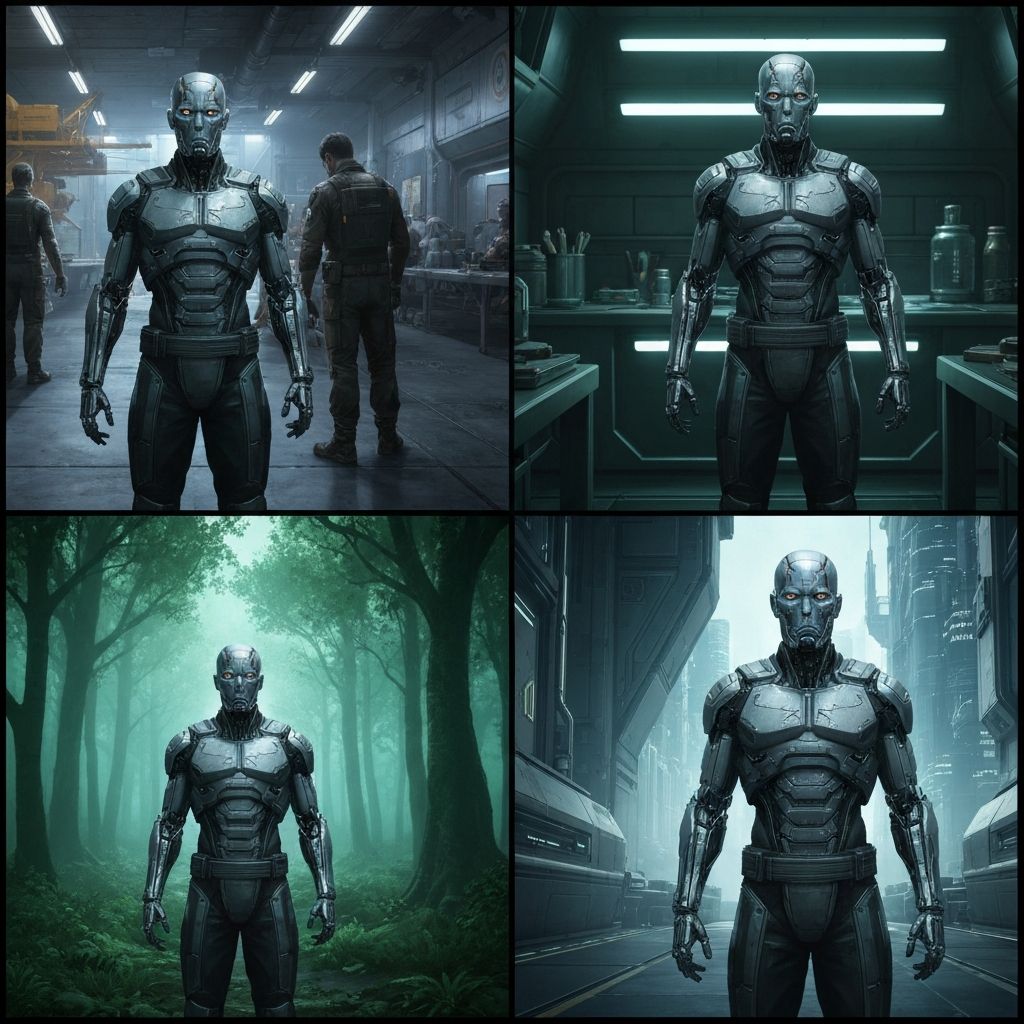
  • Four panels showing the same cyber-panda character in different locations (office, cafe, park, boardroom) with identical facial features and proportions
    Four panels showing the same cyber-panda character in different locations (office, cafe, park, boardroom) with identical facial features and proportions


    Section 3: --oref – The Omni Link (Omni Reference Authority)

    The Game Changer: In 2026, Midjourney introduced --oref (Omni Reference), which allows you to anchor both subject AND style simultaneously with near-perfect fidelity. This is SREF + CREF merged into one hyper-precise tool.

    How --oref Works

    The Difference from SREF/CREF

  • SREF locks aesthetic only (style bleeds in)
  • CREF locks character only (appearance preserved)
  • --oref locks BOTH simultaneously with unprecedented precision
  • Single Image, Dual Authority
    \\\
    /imagine prompt: The hero character in a new scene, desert landscape, sunset, action pose --oref [REFERENCE_ID]
    \
    \\

    What --oref Preserves

  • Character's facial features and body structure
  • Aesthetic and color language
  • Composition and framing philosophy
  • Lighting approach
  • Overall "energy" or mood
  • What --oref Allows to Change

  • Location and background
  • Clothing (if specified in prompt)
  • Pose and action
  • Environmental context
  • Atmospheric conditions
  • --oref Strength Control

    The --oresw parameter (Omni Reference Strength Weighting) controls how much influence the reference has:

    \\\
    --oref [ID] --oresw 100 (Maximum fidelity, strict lockdown)
    --oref [ID] --oresw 75 (High fidelity, some flexibility)
    --oref [ID] --oresw 50 (Balanced, reference influence is medium)
    --oref [ID] --oresw 25 (Subtle influence, more variation allowed)
    \
    \\

    Real-World --oref Workflow

    Scenario: You have a perfect hero image of a tech entrepreneur. You need 20 variations for a marketing campaign.

    \\\
    Base Reference: entrepreneur in a sleek office
    Scene 1: entrepreneur presenting at a conference --oref [ID] --oresw 90
    Scene 2: entrepreneur at home working on laptop --oref [ID] --oresw 90
    Scene 3: entrepreneur celebrating success --oref [ID] --oresw 90
    Scene 4: entrepreneur mentoring a junior colleague --oref [ID] --oresw 85
    \
    \\

    Result: 20 perfectly consistent campaign images with visual cohesion and narrative flow.
    A central reference image splitting into two streams labeled "Character DNA" and "Aesthetic DNA", both converging into a new generated image that blends both perfectly
    A central reference image splitting into two streams labeled "Character DNA" and "Aesthetic DNA", both converging into a new generated image that blends both perfectly


    Section 4: Strength Controls – The --sw and --cw Dials

    The Precision Layer: Not all references should have equal influence. Sometimes you want the style to dominate; sometimes you want the character to shine. The strength controls give you surgical precision.

    --sw (Style Strength Weight)

    Controls how much your SREF aesthetic influences the output:

    \\\
    --sref [ID] --sw 100 (Full stylistic authority - aesthetic dominates)
    --sref [ID] --sw 75 (Strong influence - 75% aesthetic, 25% variation)
    --sref [ID] --sw 50 (Balanced - equal aesthetic and generation freedom)
    --sref [ID] --sw 25 (Light touch - reference is subtle influence only)
    \
    \\

    When to Use High --sw Values (75-100)

  • Brand campaigns requiring strict aesthetic consistency
  • Color palette must be exact
  • Lighting signature is critical to brand identity
  • When to Use Low --sw Values (25-50)

  • Experimental variations on a style
  • Allow creativity while maintaining reference flavor
  • Testing how far you can push while staying "in brand"
  • --cw (Character Strength Weight)

    Controls how strictly your CREF character is locked:

    \\\
    --cref [ID] --cw 100 (Absolute character lock - maximum fidelity)
    --cref [ID] --cw 75 (Very high fidelity - minor variation allowed)
    --cref [ID] --cw 50 (Balanced - character essence preserved, some drift)
    --cref [ID] --cw 25 (Loose interpretation - character DNA present, style flexible)
    \
    \\

    When to Use High --cw Values (75-100)

  • Brand mascots that must be immediately recognizable
  • Character-driven storytelling (same person across scenes)
  • Legal/trademark consistency requirements
  • When to Use Low --cw Values (25-50)

  • Character evolution (aging, weight loss, transformation)
  • Subtle personality shifts across scenes
  • Allowing the new environment to "influence" the character's appearance
  • Combined Strength Strategy

    \\\
    /imagine prompt: Hero character in boardroom, professional lighting
    --cref [CHARACTER_ID] --cw 95
    --sref [BRAND_AESTHETIC_ID] --sw 80
    \
    \\

    This locks the character hard (95%) while maintaining brand aesthetic at high fidelity (80%). Result: Unmistakable character, perfectly on-brand.
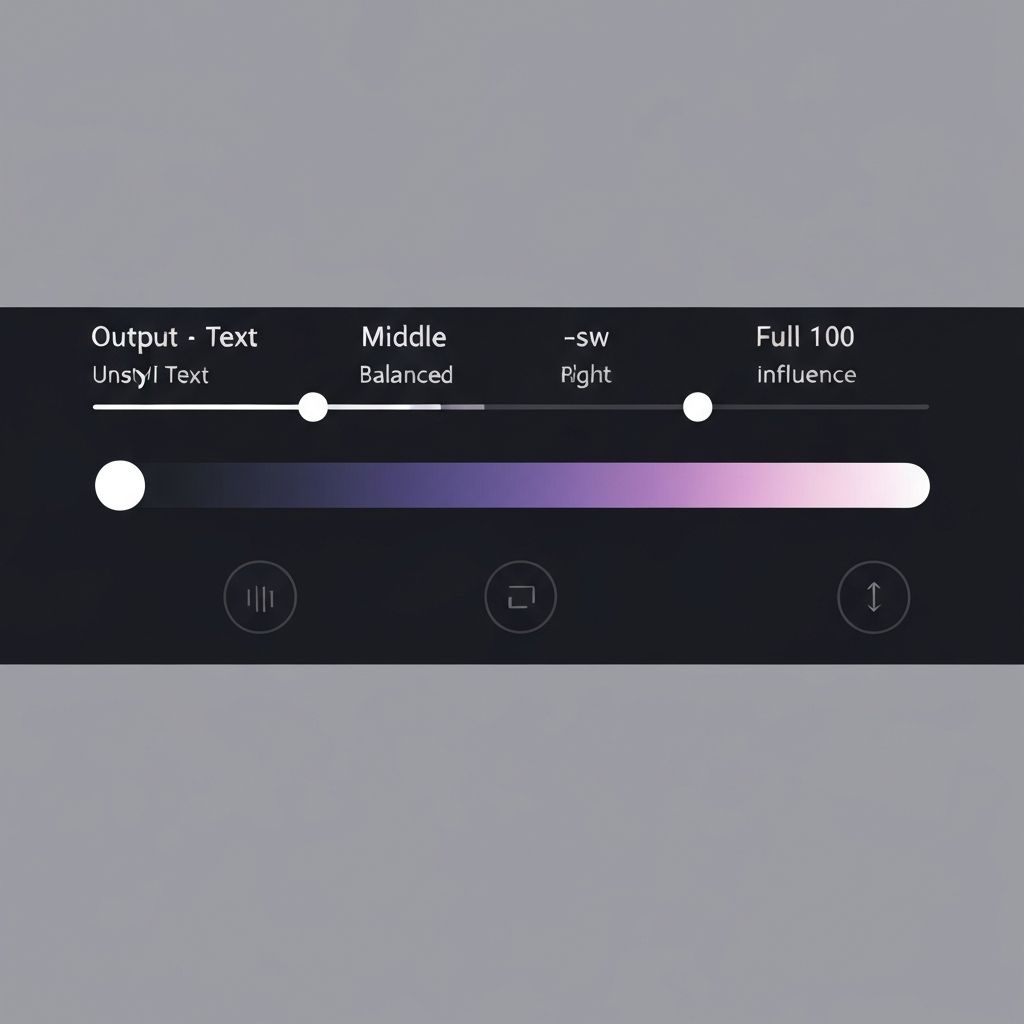
    A horizontal slider showing three outputs: weak influence (barely styled character), balanced (perfect blend), and full influence (style completely dominates)
    A horizontal slider showing three outputs: weak influence (barely styled character), balanced (perfect blend), and full influence (style completely dominates)


    Section 5: Building Brand Universes – Real-World Workflow

    The Campaign: You're launching a luxury tech brand with:

  • A distinctive brand mascot (cyber-panda)
  • A color palette (midnight blue, gold, neon cyan)
  • A photographic style (cinematic, high-end, luxe aesthetic)
  • 50 marketing assets needed across 10 different scenarios
  • The Reference Architecture

    Step 1: Create Your Authorities

    Reference A: Brand Aesthetic

  • Generate a perfect hero image embodying your brand's visual language
  • Luxury tech, midnight blue + gold color palette, cinematic lighting
  • This is your --sref authority
  • Reference B: Brand Character

  • Generate your cyber-panda mascot in its "canonical" form
  • Perfect proportions, distinctive features, on-brand styling
  • This is your --cref authority
  • Step 2: Build Your Campaign Grid

    For each of 50 assets, use both references:

    \\\
    Scene 1: Mascot in modern office
    /imagine prompt: Cyber-panda working at a minimalist desk, floor-to-ceiling windows, sunset cityscape, professional attire --cref [PANDA_ID] --cw 95 --sref [AESTHETIC_ID] --sw 85

    Scene 2: Mascot at tech conference
    /imagine prompt: Cyber-panda on stage presenting, dramatic stage lighting, conference room, energetic pose --cref [PANDA_ID] --cw 90 --sref [AESTHETIC_ID] --sw 85

    Scene 3: Mascot mentoring
    /imagine prompt: Cyber-panda in discussion with junior team member, modern office, collaborative vibe, warm lighting --cref [PANDA_ID] --cw 90 --sref [AESTHETIC_ID] --sw 80
    \
    \\

    The Result

    50 assets that are:

  • ✅ Instantly recognizable (same mascot)
  • ✅ Perfectly on-brand (same aesthetic)
  • ✅ Contextually unique (different scenarios)
  • ✅ Ready for deployment (no retouching needed)
  • ✅ Produced in 4-5 hours (not weeks)
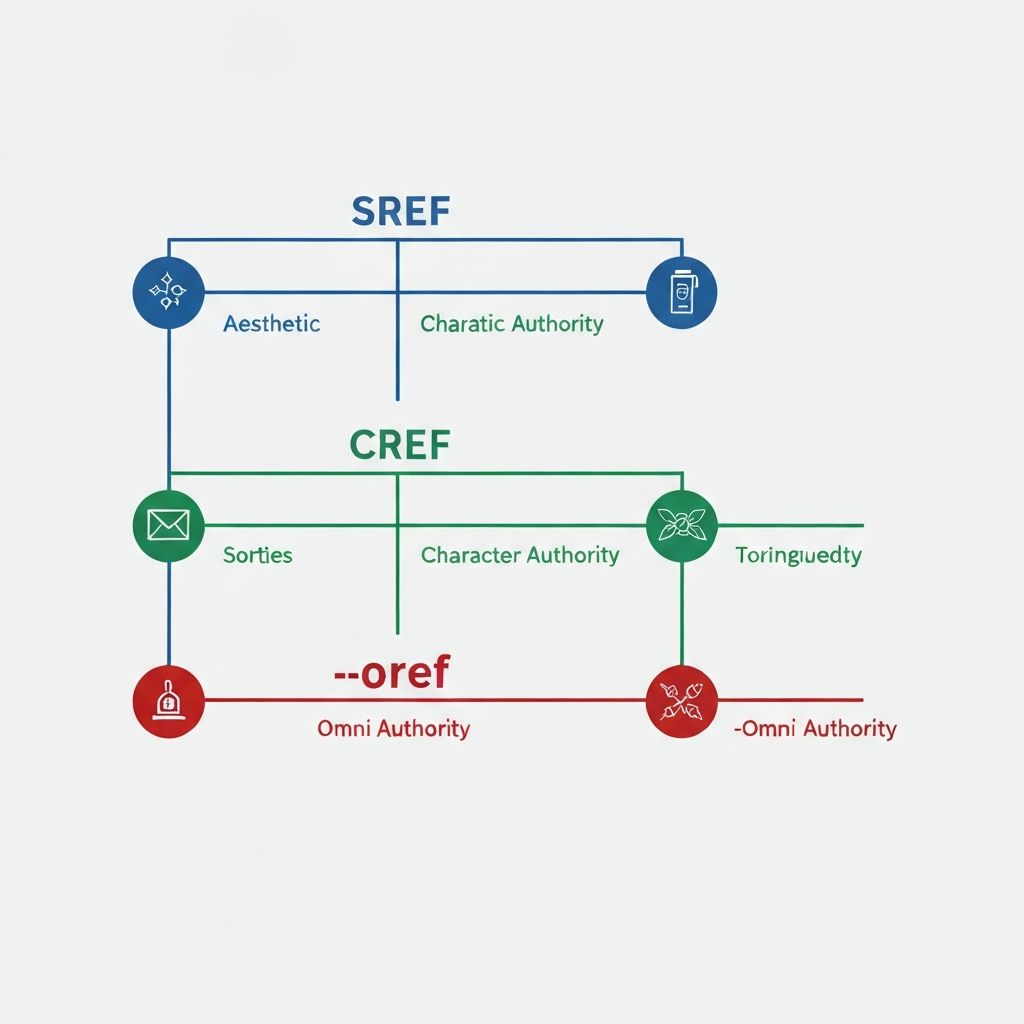
  • A hierarchical architecture diagram showing Reference Authority at top, branching to SREF, CREF, and --oref, all flowing down to multiple consistent generated images
    A hierarchical architecture diagram showing Reference Authority at top, branching to SREF, CREF, and --oref, all flowing down to multiple consistent generated images

    Time Comparison

    Without Reference System:

  • Generate: 20+ attempts per image (no consistency)
  • Retry with tweaks to "lock" look
  • Manual brand consistency enforcement
  • Total for 50 assets: 20-30 hours
  • With SREF/CREF/--oref:

  • Generate: 1-2 attempts per image (locked references)
  • Strength dials fine-tune instantly
  • Automatic brand consistency
  • Total for 50 assets: 4-6 hours
  • Learn AI, after work

    Track your progress, earn XP, and unlock more free tutorials in the AfterWork Bytes app.

    Open this tutorial in the app