
Introduction: Demystifying the "magic"
For many, AI feels like a scene from a sci-fi movie — a sentient computer that "thinks" and "feels." In reality, AI is less about magic and more about extraordinary mathematics applied at lightning speed.
We are living through a shift similar to the invention of the steam engine or the internet. In the past, humans had to tell computers exactly what to do using rigid code. Today, we are teaching computers how to learn the rules for themselves. This tutorial is your roadmap to understanding this transition, the technology behind it, and how you can harness it without being a data scientist.
What you'll learn
Section 1: What is AI?
At its simplest, Artificial Intelligence (AI) is a field of computer science that builds systems capable of performing tasks that typically require human cognition — such as recognizing faces, translating languages, or making complex decisions.

The two flavors of AI
Narrow AI (ANI): This is what we use today. It is "narrow" because it is a specialist. An AI that can beat the world champion at Chess cannot tell you how to bake a cake. It excels in a predefined environment. Your Netflix recommendations, Siri, and face-recognition locks are all Narrow AI.
General AI (AGI): This is the "Holy Grail." An AGI would have the ability to learn any intellectual task that a human can. It could write a legal brief in the morning and repair a car engine in the afternoon. Currently, AGI exists only in research labs and science fiction.
Section 2: How AI "learns"
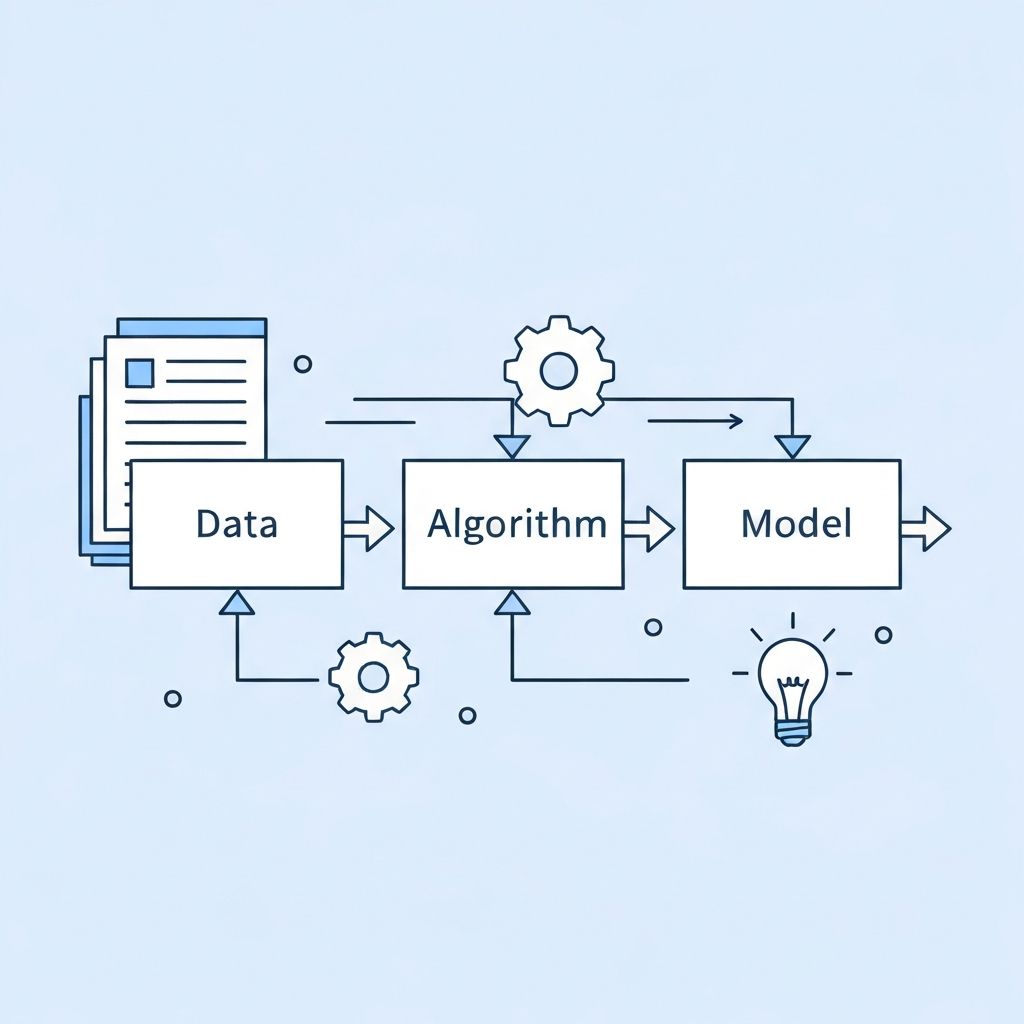
To understand AI, you must understand Machine Learning (ML). In traditional programming, a human writes a "recipe" in code: if the user clicks this, then do that. In Machine Learning, the computer creates its own recipe by looking at examples.
The three pillars of learning
1. The data (the experience) — AI needs "food." If you want an AI to identify a fraudulent transaction, you feed it millions of examples of both honest and dishonest bank records.
2. The algorithm (the teacher) — This is the mathematical framework. It looks at the data and tries to find correlations (e.g. most fraud happens at 3 AM from overseas IP addresses).
3. The model (the result) — Once the algorithm has finished looking at the data, the resulting "knowledge" is saved as a Model. You can then give this model new, unseen data, and it will make a prediction.
Section 3: Discriminative vs Generative AI
For decades, AI was mostly discriminative. It was a "judge." It looked at data and classified it: this is a cat, this is a spam email, this customer is likely to cancel their subscription.
The massive hype we see today is due to Generative AI.

Generative AI doesn't just judge — it creates. Because it has analyzed the underlying structure of millions of images, poems, or lines of code, it can generate entirely new content that follows those same patterns.
When you ask a Generative AI for a picture of "A neon-lit Hong Kong in the year 2099," it isn't searching Google Images. It is "dreaming" up a new image based on its mathematical understanding of "neon," "Hong Kong," and "futuristic."
Section 4: Inside the LLM "brain"
When you interact with a tool like Gemini or ChatGPT, you are talking to a Large Language Model (LLM). This is a specific type of Generative AI trained on almost the entire public internet.

How it "speaks"
An LLM doesn't actually understand the meaning of words the way you do. Instead, it treats language as a statistical game of "what word comes next?"
If I say "The capital of France is...", your brain knows the answer is Paris. An LLM knows the answer is Paris because, in its trillions of pages of training data, the word "Paris" follows that specific sequence of words 99.9% of the time.
By scaling this up to billions of parameters, the AI can handle complex reasoning, summarize long documents, and even write software code. It is essentially a super-autocomplete.
Section 5: AI in the wild
You don't need to go to a special website to find AI — it is already the invisible "glue" of the modern world.

Section 6: The "ghost in the machine"
As a beginner, it is vital to know that AI is confidently fallible.
1. Hallucinations
Because LLMs are predicting the next word based on probability, they can sometimes "hallucinate." They will state a fact that sounds perfectly logical but is completely made up. Never treat an AI as a source of truth without verifying facts.
2. Bias and "garbage in, garbage out"
If an AI is trained on data that contains human prejudice (like old hiring records that favored men), the AI will learn and amplify that bias. It doesn't know what is "fair" — it only knows what is in the data.
3. The black box
Even the engineers who build these models don't always know exactly why an AI made a specific decision. This is known as the "black box" problem, which is why AI is currently used as an assistant, not a final decision-maker.
Section 7: Mastering the interface
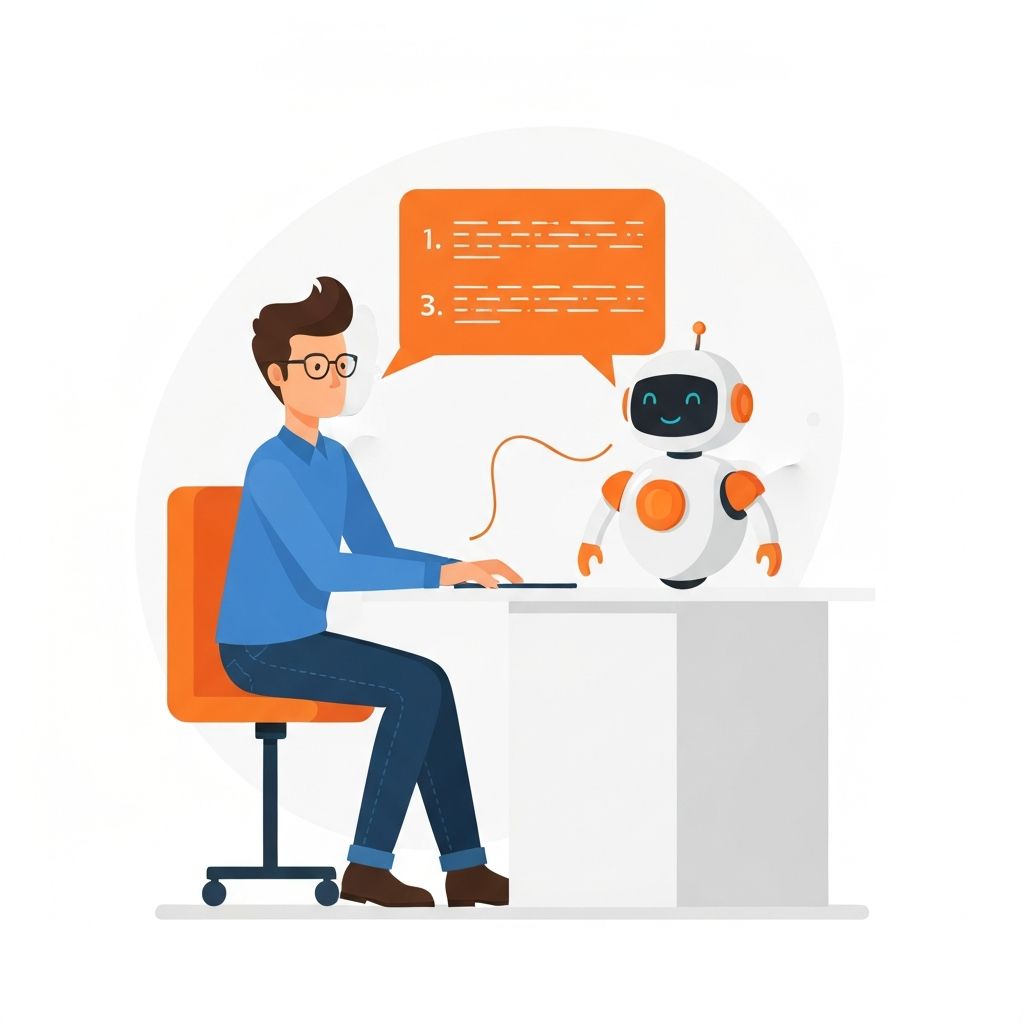
The most important skill in the AI era isn't coding — it's communication. The instructions you give an AI are called prompts.
The "expert assistant" mental model
Instead of talking to the AI like a Google search bar, talk to it like a very smart, very fast, but literal-minded intern.
Section 8: The path forward
We are moving from a world where we use computers to a world where we collaborate with them. For a beginner, the goal is to develop AI intuition.